


 Language


More Language
Language 
Selecting between 0.35 mm and 0.5 mm veneer is not simply a matter of choosing the larger number. The right specification depends on the buyer's panel construction, substrate, pressing process, sanding plan, grade requirement and approved sample.
This guide provides a practical framework for comparing the two thicknesses without treating either option as universally better.
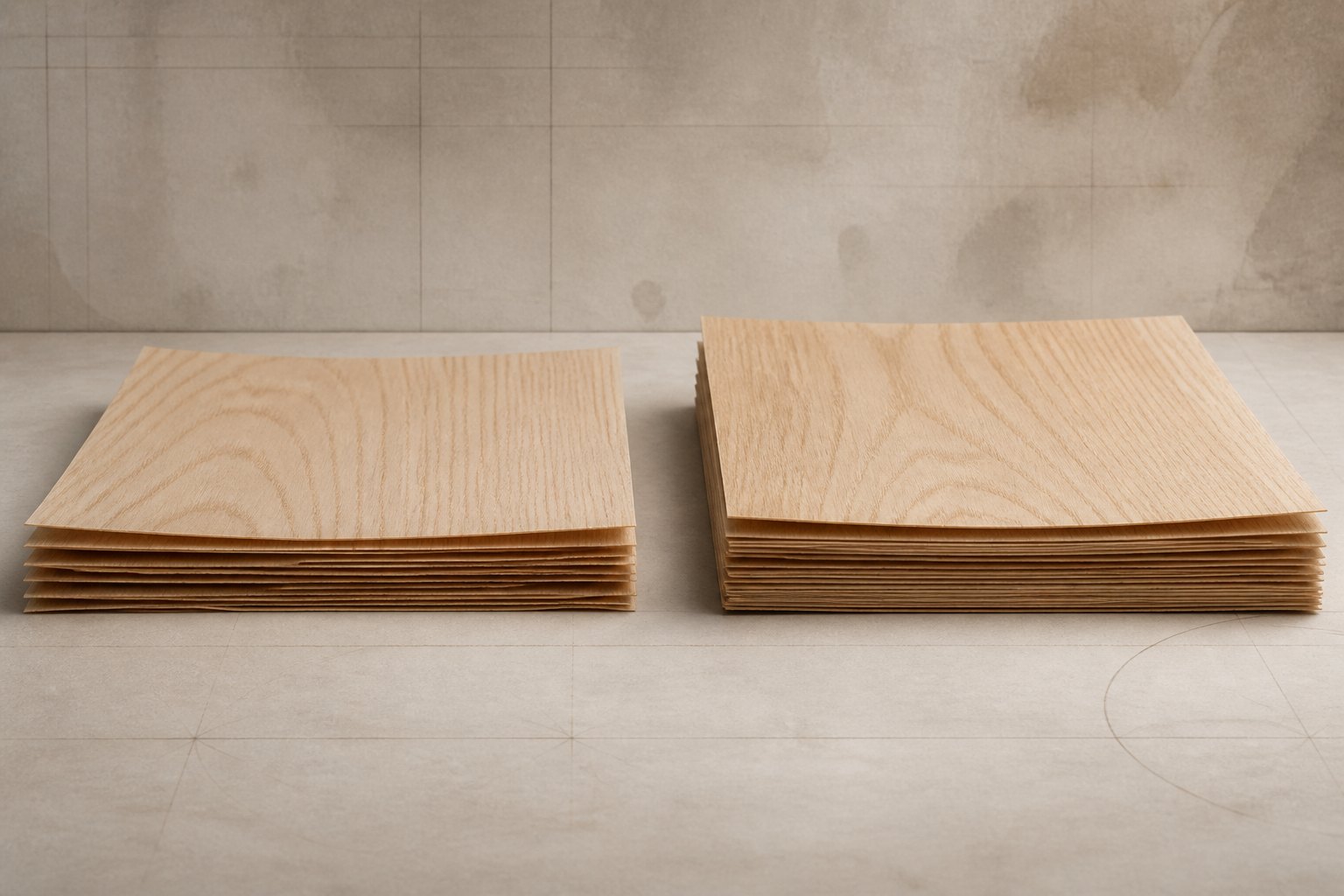
Illustration disclosure: The three images in this article are AI-generated educational visuals. They do not show a real product batch, factory, inspection, certificate or shipment.
Before requesting a quotation, define how the veneer will be used in the finished panel. A nominal thickness should be reviewed together with the substrate condition, adhesive and pressing process, expected surface preparation and any sanding or calibration steps.
If these details are not yet fixed, ask the supplier to prepare a reference sample and confirm the quality standard before mass production.
A buyer may specify 0.35 mm when the purchasing plan calls for a thinner veneer layer. The choice should still be tested against the actual substrate and production process.
Before confirming 0.35 mm, check:
Whether the receiving process is set up for the specified thickness
Whether the substrate surface is sufficiently consistent
Whether the planned sanding or calibration step is compatible with the specification
Whether the approved grade and natural appearance match the finished panel requirement
Whether thickness tolerance and measurement method are written into the order specification
A buyer may select 0.5 mm when the order specification calls for a nominally thicker veneer layer. The larger nominal thickness does not replace grade approval or process testing.
Before confirming 0.5 mm, check:
Whether the panel construction and pressing process are designed for the specification
Whether the required sheet dimensions are available for the order
Whether the approved sample reflects the accepted color and natural grain range
Whether repaired or face-grade requirements are clearly defined
Whether the packing method protects the sheets during the planned route
| Decision point | 0.35 mm | 0.5 mm |
|---|---|---|
| Nominal thickness | Thinner option | Thicker option |
| First confirmation | Process compatibility | Panel construction compatibility |
| Sample requirement | Recommended before mass production | Recommended before mass production |
| Grade requirement | Must be stated separately | Must be stated separately |
| Sheet dimensions | Confirm for each order | Confirm for each order |
| Packing and quantity | Confirm before quotation | Confirm before quotation |
Thickness is only one part of the purchase specification. Grade, dimensions, quantity, packing and the approved sample should be recorded separately.
Thickness and grade answer different questions. Thickness defines a nominal sheet specification, while grade describes the agreed visual and repair standard.
For Mersawa veneer, the confirmed classification includes:
A Face
B Face
C Face
Whole Sheet
A Repaired
B Repaired
C Repaired
The buyer should identify both the required thickness and the required grade when requesting a quotation.
Include the following information in the first inquiry:
Product or wood veneer type
Required thickness: 0.35 mm or 0.5 mm
Required grade
Sheet length and width
Order quantity
Packing requirement
Destination port
Reference sample or approved quality photo, when applicable
A complete inquiry reduces repeated clarification and makes the final specification easier to verify.
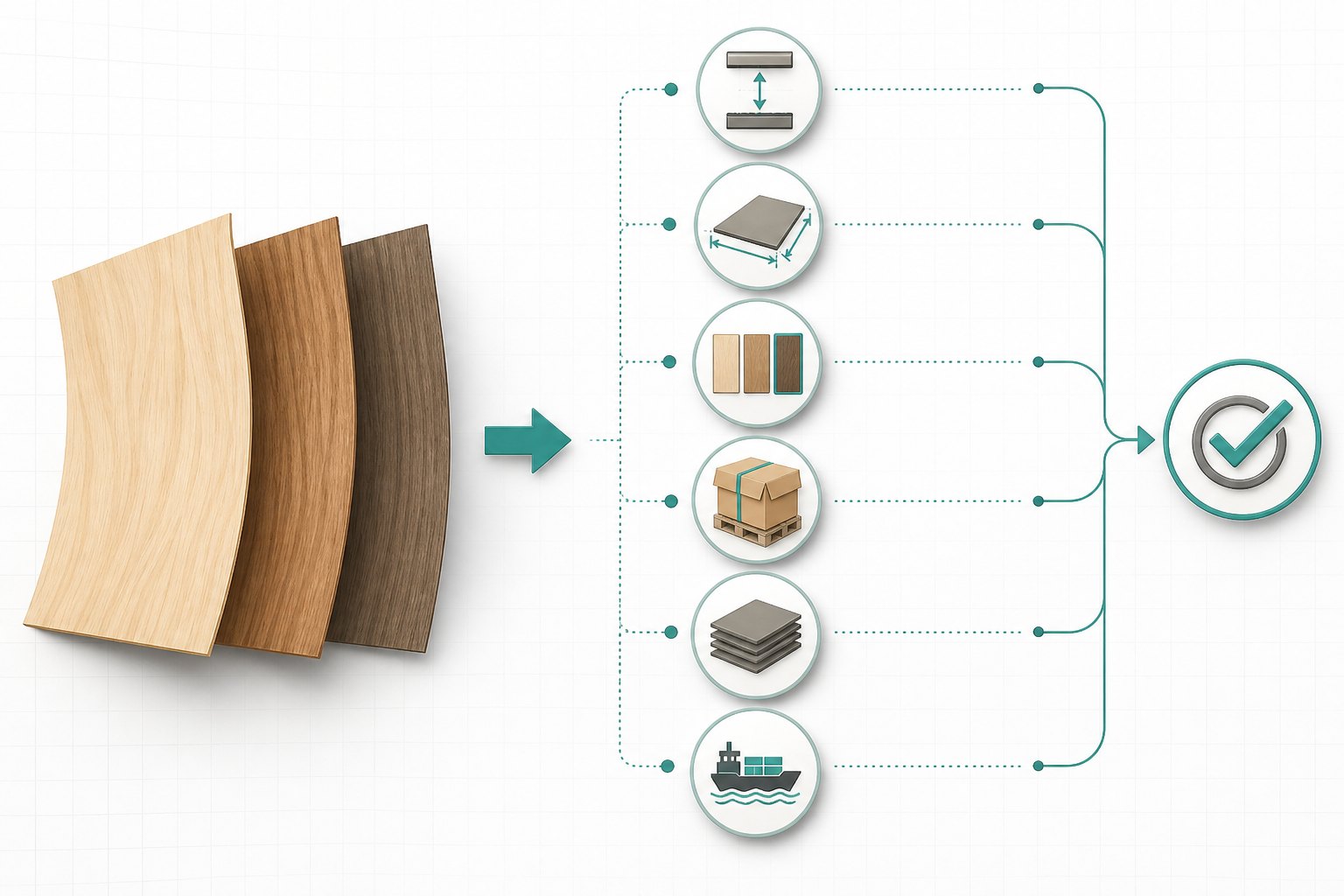
Natural color and grain can vary between sheets and batches. When appearance is important, confirm a physical sample or an agreed set of quality photos before mass production.
The approval record should identify the veneer type, nominal thickness, grade, accepted visual range and any agreed repair limits. It should be used as a purchasing reference rather than presented as a certificate.

Zhide supplies Mersawa veneer sheets in confirmed 0.35 mm and 0.5 mm thickness options. The grading system includes face, whole-sheet and repaired classifications.
T/T and L/C are accepted, with a 30% deposit payable upon signing the contract. Delivery is arranged within 20 days after receipt of the deposit; unusually large-volume orders may require a separately confirmed schedule.
View the specification and grade details on the Mersawa Veneer Sheets product page, or send your thickness, grade, dimensions, quantity, packing requirement and destination port to request a quotation.
No. The correct choice depends on the purchase specification, substrate, panel construction, process and approved sample. A larger nominal thickness is not a substitute for grade or process confirmation.
They should be stated as separate specification fields. For example, a buyer can request a confirmed thickness together with an agreed face or repaired grade.
Send the veneer type, thickness, grade, sheet dimensions, quantity, packing requirement and destination port. Include a reference sample or quality photo when appearance consistency is important.
Natural veneer can vary in color, grain and other visual characteristics. A sample gives the buyer and supplier a clearer reference for the agreed order standard.
 Address:2nd Floor, Building 6, 120 meters west of the intersection of Chuangye Road and Xingye Road, Yitang Town, Lanshan District, Linyi City, Shandong Province
 WhatsApp:+8615020973332
 Wechat: Eden15020973332
  E-mail:eden@zhide.life