


 Language


More Language
Language 
Choosing rotary-cut veneer is not only a matter of wood species or price. For plywood mills, furniture manufacturers and panel producers, the wrong thickness tolerance, moisture condition or surface grade can create problems during composing, gluing, pressing and finishing.
This guide explains the main points buyers should confirm with a rotary cut veneer supplier before approving samples or placing a production order. Exact specifications must always be agreed according to the intended product, production line and destination market.
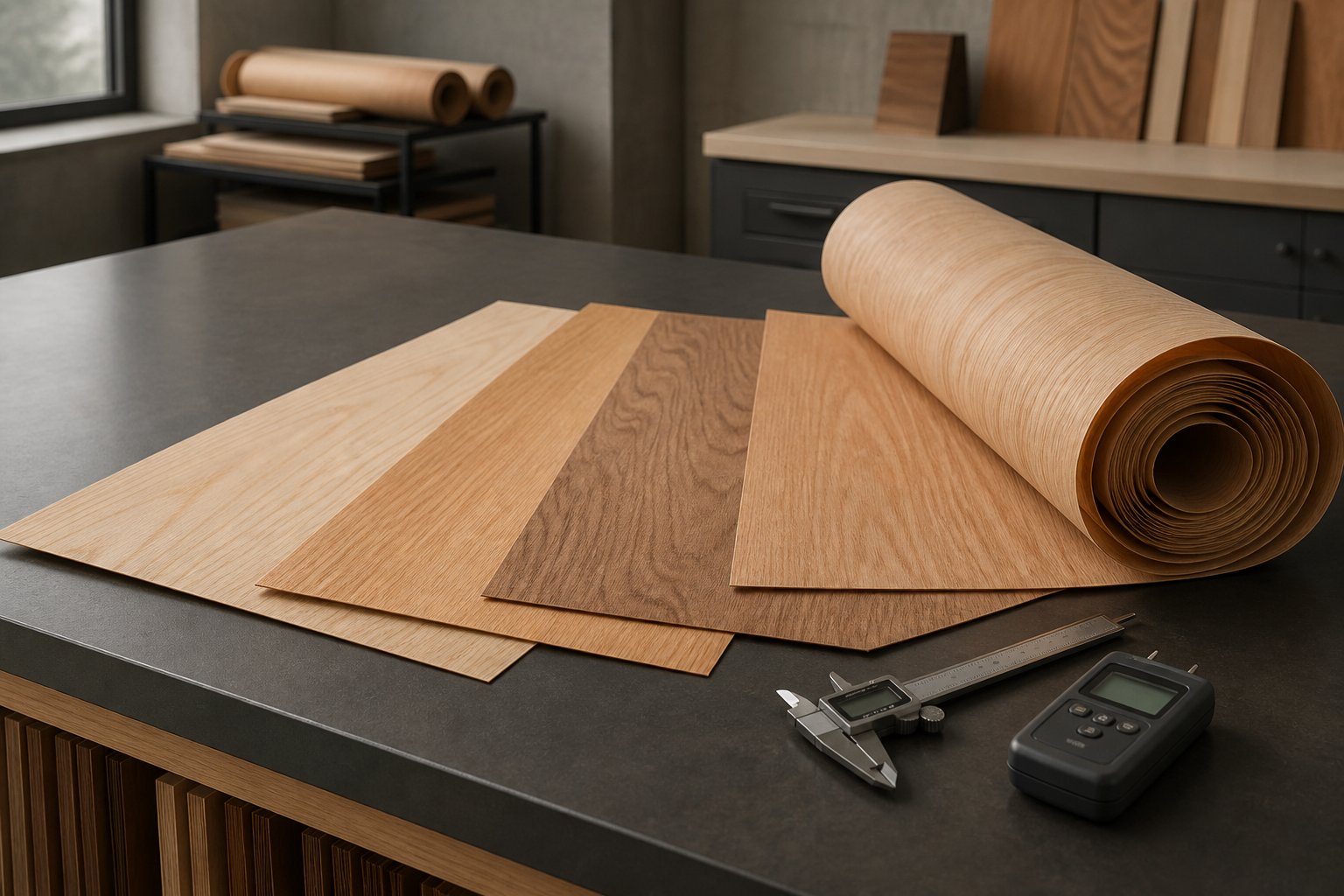
The application determines which veneer characteristics matter most. A face veneer for a visible furniture panel is evaluated differently from a core veneer used inside plywood.
Before requesting a quotation, tell the supplier:
whether the veneer will be used for plywood core, face, back or furniture panels;
the target panel construction and finished thickness;
the gluing and hot-pressing process;
whether the surface will be painted, laminated or left visible;
the acceptable repair, knot and color requirements;
the required sheet size, bundle format and shipment volume.
A clear application brief helps the supplier recommend a suitable species, grade and production tolerance instead of quoting a generic veneer.
Rotary cutting produces a broad grain pattern because the log is peeled continuously. Grain appearance can vary between logs and even within one log, so visual expectations should be defined with physical samples or an approved reference set.
When comparing species, consider color consistency, grain visibility, density, handling strength, gluing performance, dimension availability and whether the veneer is intended for a visible surface or structural core. Do not rely only on a species name. Ask for current sample sheets from the same supply program that will be used for production.
Nominal thickness alone is not enough. Variations within a sheet, between sheets and between bundles can affect glue spread, panel balance and sanding allowance.
A purchase specification should state the target nominal thickness, permitted tolerance, measurement locations, conditioning state, acceptable thin spots or edge damage, and sampling frequency. For production trials, measure multiple points rather than checking only one edge.
Moisture condition influences veneer flexibility, handling, adhesive behavior and dimensional stability. Veneer that is too dry may become brittle during transport or composing, while uneven or excessive moisture can complicate gluing and pressing.
Buyers should confirm the project-specific moisture range, variation within a bundle, measurement method, conditioning requirements and protection from rain or humidity during transport.
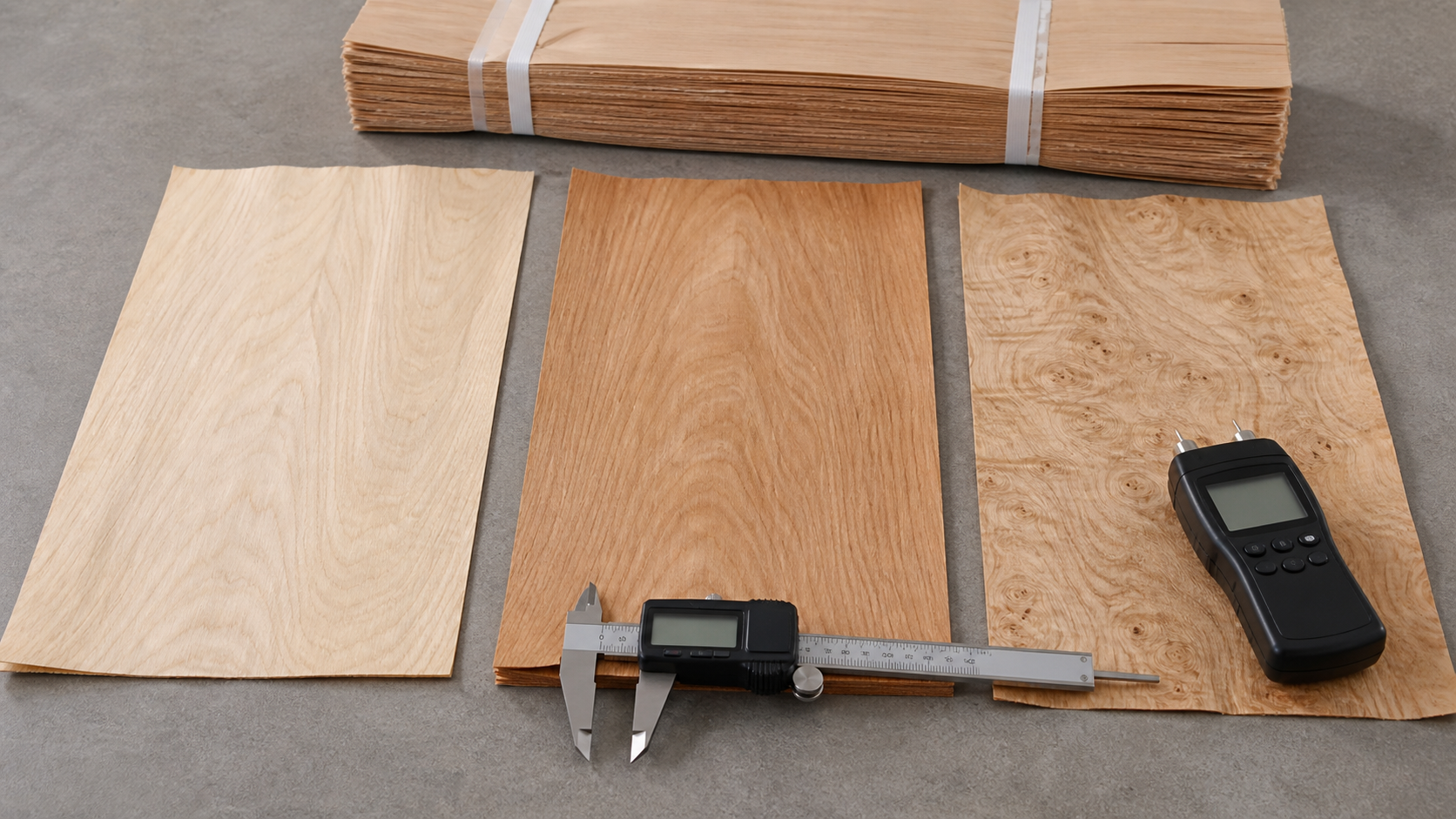
Grade names are not always identical between suppliers. A buyer should convert grade expectations into visible, measurable acceptance rules covering knots, splits, discoloration, roughness, holes, missing edges, repairs, waviness and color variation.
For repeat orders, keep approved reference samples and dated photographs. These are more reliable than using a grade letter without a shared visual standard.
In addition to nominal length and width, inspect minimum usable dimensions, edge straightness, squareness, shrinkage allowance and consistency between bundles. If the veneer will be composed automatically, tell the supplier about the equipment and feeding direction used in the factory.
Packing should prevent edge impact, bending, contamination and moisture exposure during handling and sea transport. Confirm sheets per bundle, internal wrapping, edge protection, strapping, pallet or crate requirements, labels and the container loading plan.
Review representative physical samples.
Confirm a written specification.
Conduct a production trial when possible.
Record measurement methods and acceptance limits.
Approve packing and labeling.
Keep signed or dated reference samples.
| Item | What the buyer should confirm |
|---|---|
| Application | Core, face, back, furniture panel or another use |
| Species | Exact species and acceptable visual variation |
| Thickness | Nominal value, tolerance and measurement method |
| Moisture | Project-specific target range and test method |
| Grade | Written defect limits plus approved visual samples |
| Dimensions | Minimum usable size, squareness and shrinkage allowance |
| Packing | Bundle protection, labeling and container loading plan |
| Samples | Representative samples and production-trial approval |
Provide the intended application, wood species, grade, thickness and tolerance, sheet dimensions, expected quantity, packing requirement and destination port.
One sheet can confirm the general appearance, but it does not show production variation. Review representative samples and agree on a written acceptance specification.
Moisture condition can affect handling, adhesive performance, pressing and dimensional stability. Agree on a project-specific range and measurement method.
Use measurable defect limits, approved physical samples and dated photographs instead of relying only on grade names.
Shandong Zhide Wood Industry Co., Ltd. supplies wood materials for plywood, furniture and panel production. To discuss rotary-cut veneer requirements, send the application, species, thickness, size, quantity and destination port.
Explore our Rotary Cut Veneer products.
Learn more about Shandong Zhide Wood.
 Address:2nd Floor, Building 6, 120 meters west of the intersection of Chuangye Road and Xingye Road, Yitang Town, Lanshan District, Linyi City, Shandong Province
 WhatsApp:+8615020973332
 Wechat: Eden15020973332
  E-mail:eden@zhide.life