


 Language


More Language
Language 
Engineered White Oak Veneer: Stable Grain and Manual Quality Control for Furniture Panels
In modern furniture and panel production, surface consistency has become one of the key factors for manufacturers, wholesalers, and project suppliers. Buyers are not only looking for a beautiful wood grain appearance, but also stable color, controllable texture, and reliable supply for repeat orders.
Engineered white oak veneer is developed for this purpose.
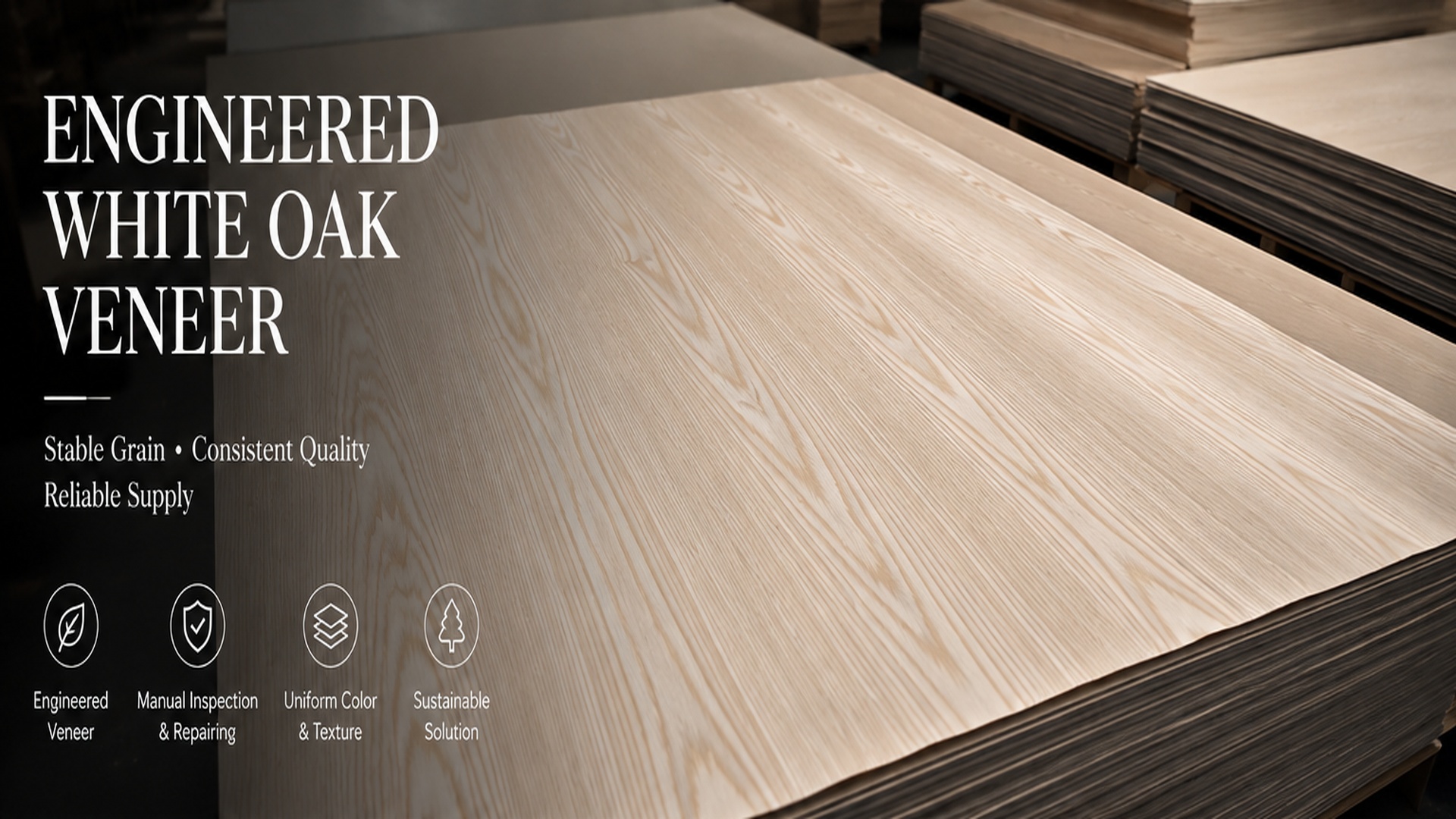
Unlike natural white oak veneer, engineered veneer is not cut directly from natural white oak logs. It is an artificial veneer product made through a controlled production process. The surface is designed with a white oak grain effect, offering a clean, light, and natural-looking appearance while keeping the pattern more stable from batch to batch.
For furniture factories, plywood manufacturers, door factories, and decorative panel suppliers, this type of veneer can help reduce natural variation and improve production efficiency.
What Is Engineered White Oak Veneer?
Engineered white oak veneer is a decorative veneer surface material designed to imitate the visual effect of white oak grain. Compared with natural veneer, its biggest advantage is consistency.
Natural veneer often has color differences, irregular grain, knots, mineral lines, and unpredictable defects. These natural features can be attractive in high-end custom furniture, but they may also create difficulties for bulk panel production.
Engineered veneer provides a more controlled solution. The grain can be arranged in a regular pattern, the color can be kept more uniform, and the overall surface appearance is easier to match across different panels.
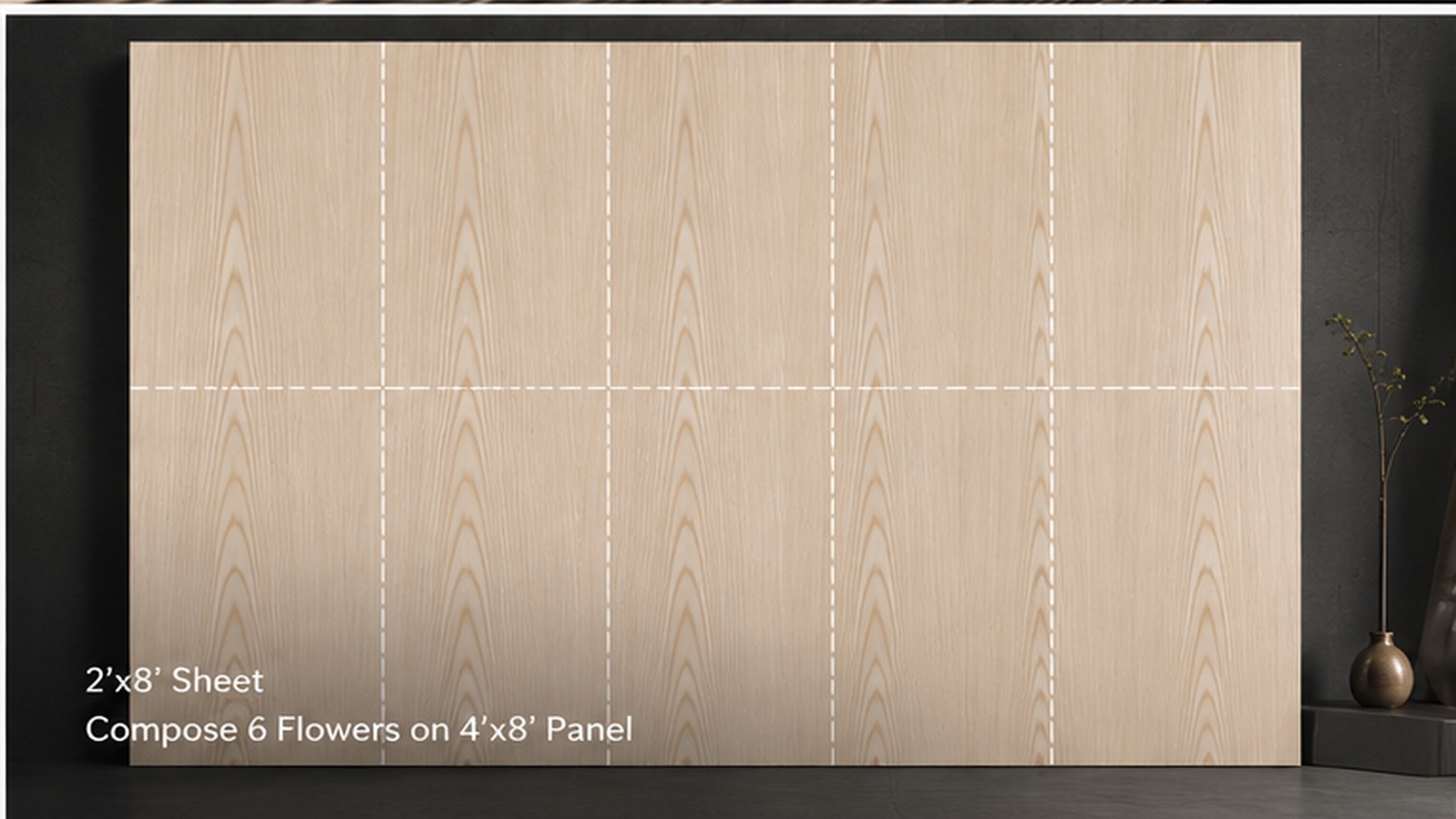
The veneer shown in this production inspection is 2×8 ft size. When arranged into a 4×8 ft panel, it can form six flower / cathedral grain patterns, creating a balanced and decorative layout for panel surfaces.
Manual Inspection and Repairing Before Delivery
Although engineered veneer is made through a controlled process, quality inspection is still very important.
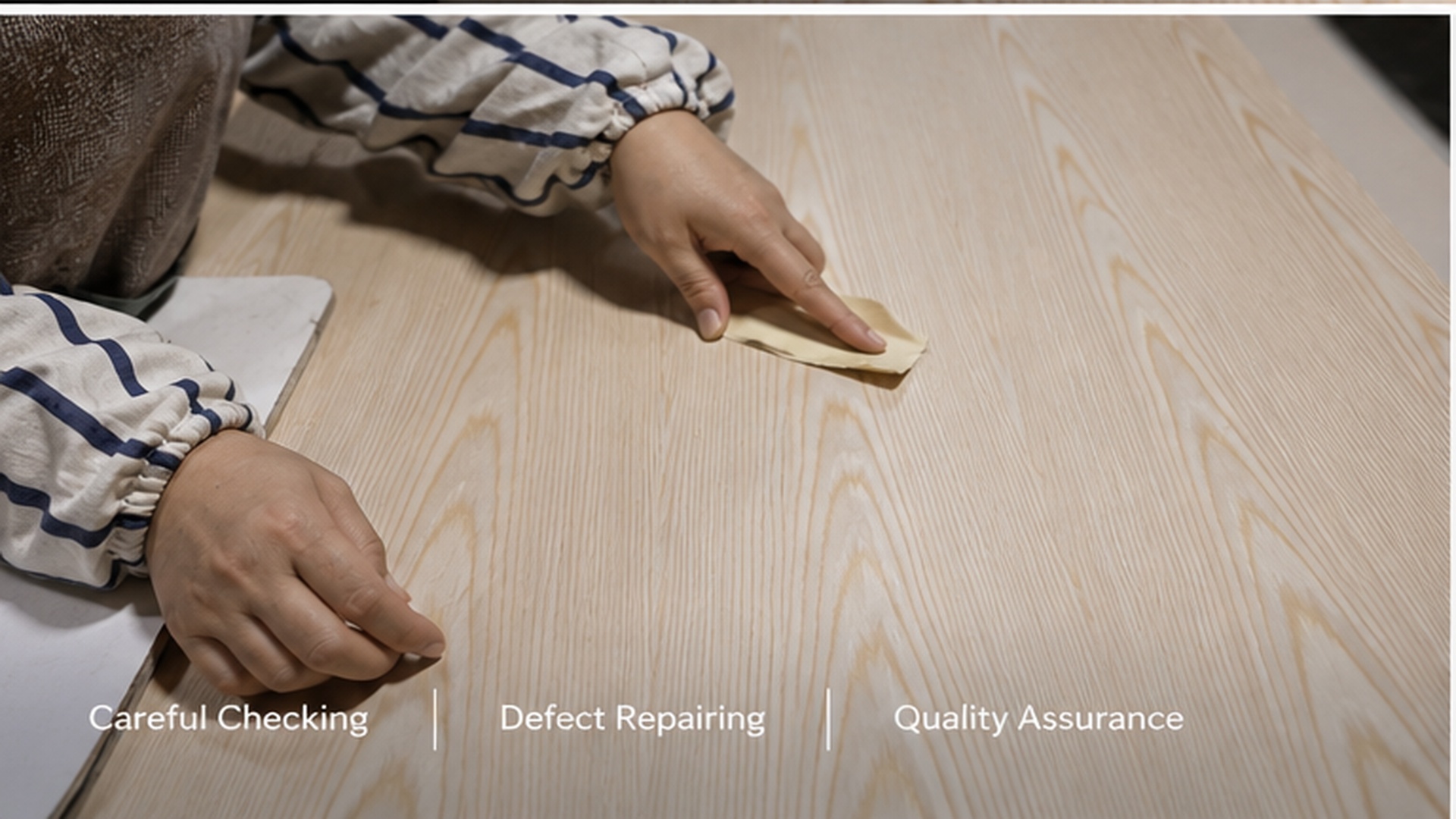
In the video, workers are checking the veneer surface sheet by sheet. If small defects are found, they are repaired manually before the veneer moves to the next production stage or delivery process.
This manual inspection helps control several important details:
Surface cleanliness
Grain continuity
Small cracks or broken edges
Color consistency
Local defects on the veneer face
Repair quality before lamination or pressing
For B2B buyers, these details are important because veneer defects may become more visible after pressing, sanding, coating, or lamination. A clean and stable veneer surface helps reduce rework, improve finished panel quality, and support more efficient production.
Why Buyers Choose Engineered Veneer
Engineered veneer is widely used because it combines decorative value with practical production advantages.
First, it offers more stable grain. For large orders, buyers usually need the finished panels to look similar across different batches. Engineered veneer makes this easier than natural veneer.
Second, the color is more controllable. For furniture, cabinets, doors, and wall panels, consistent color helps create a cleaner and more professional final product.
Third, engineered veneer can improve material utilization. Natural veneer may have more random defects and higher selection loss. Engineered veneer is more suitable for standard panel production where stable appearance and cost control are both important.
Fourth, it is easier to match with plywood, MDF, particleboard, and other panel substrates. This makes it a practical surface material for factories producing furniture panels, door skins, decorative plywood, and interior boards.
Main Applications
Engineered white oak veneer can be used in many furniture and interior material applications, including:
Plywood surface decoration
Furniture panels
Cabinet and wardrobe panels
Door skin production
Wall panels and interior decorative boards
Hotel, office, and commercial decoration projects
Melamine faced panel or veneer faced panel production
The light white oak grain is suitable for modern interior styles, especially in Southeast Asian and Middle Eastern markets where clean wood tones are commonly used in furniture, cabinets, and interior decoration.
A Practical Alternative to Natural White Oak Veneer
It is important to clearly understand the product positioning.
This product is not natural white oak veneer. It is engineered veneer with a white oak grain design.
For buyers who need rare natural texture, natural veneer may still be used in premium customized products. But for bulk furniture production and decorative panels, engineered veneer is often more practical.
It provides a similar visual direction with better stability, easier matching, and more controllable cost. This is why more panel factories and furniture manufacturers are using engineered veneer for regular production.
What Buyers Should Confirm Before Ordering
Before purchasing engineered white oak veneer, buyers should confirm the following details:
Required size: such as 2×8 ft or custom size
Final panel size: such as 4×8 ft layout
Grain arrangement: number of flower / cathedral patterns
Thickness requirement
Substrate application: plywood, MDF, particleboard, door skin, etc.
Surface quality grade
Packing method
Order quantity and delivery schedule
These details help suppliers prepare the correct product and avoid mismatch during production.
Conclusion
Engineered white oak veneer is a stable and practical surface material for modern furniture and panel production. With its controlled grain, consistent color, and manual quality inspection, it offers buyers a reliable alternative to natural veneer for bulk applications.
From 2×8 ft veneer sheets to 4×8 ft decorative panel layouts, engineered veneer can support plywood factories, furniture manufacturers, door factories, and interior material suppliers with better surface consistency and production efficiency.
For buyers looking for a clean white oak grain effect with stable quality, engineered veneer is a practical choice for long-term supply.
FAQ
Q1: Is this natural white oak veneer?
No. This is engineered veneer with white oak grain. It is not natural white oak veneer.
Q2: What is the size of this veneer?
The veneer shown is 2×8 ft. It can be arranged into a 4×8 ft panel layout.
Q3: How many flower patterns can be composed on a 4×8 ft panel?
A 4×8 ft panel can be composed with six flower / cathedral grain patterns.
Q4: What is the main advantage of engineered veneer?
The main advantages are stable grain, consistent color, controllable appearance, and better suitability for bulk panel production.
Q5: What applications is it suitable for?
It can be used for plywood surfaces, furniture panels, door skins, wall panels, and interior decorative boards.
 Address:2nd Floor, Building 6, 120 meters west of the intersection of Chuangye Road and Xingye Road, Yitang Town, Lanshan District, Linyi City, Shandong Province
 WhatsApp:+8615020973332
 Wechat: Eden15020973332
  E-mail:eden@zhide.life